
What happens if we stop communicating like humans
“Communicate like a human.” “Corporate polish creates distance, not trust.” These phrases resonated with me at Universities UK’s 2026 marketing and comms conference.
I’ve been banging on about the value of authenticity in comms for years. And perhaps it's never been more important.
At a time when Chatty G and Claude PT will exfoliate all lumps and bumps out of your hand-crafted copy, and where anyone with access to Canva can whip up a glossy social media graphic in moments… the need to be real, be messy, be human has become strategically savvy.
I did a bit of analysis with one of my clients. Our communications that were driven by authentic storytelling performed three times better than content driven by commercial imperative. Or, to put it another way, audiences prefer content that says “oh hey, here’s a cool thing we thought you’d like” rather than “here’s a shiny advert - now spend some money”.
This is intuitively obvious for comms professionals. But we were happy to have cold, hard numbers to back it up.
And of course, the price of being too stiff, too branded, too perfect is that audiences smell it a mile off, and stop listening. Industry best practice for content for socials and newsletters is that 80% of what you pump out should be community-building and only 20% should be sales-focussed.
Many brands get this. Hat tips to the universities like Loughborough, Westminster and London Met, as well as the likes of RSPB and National Trust, for their content. They know who their audiences are.
In essence, you only win the right to try to sell things to your audience if you’ve earned their ear first.
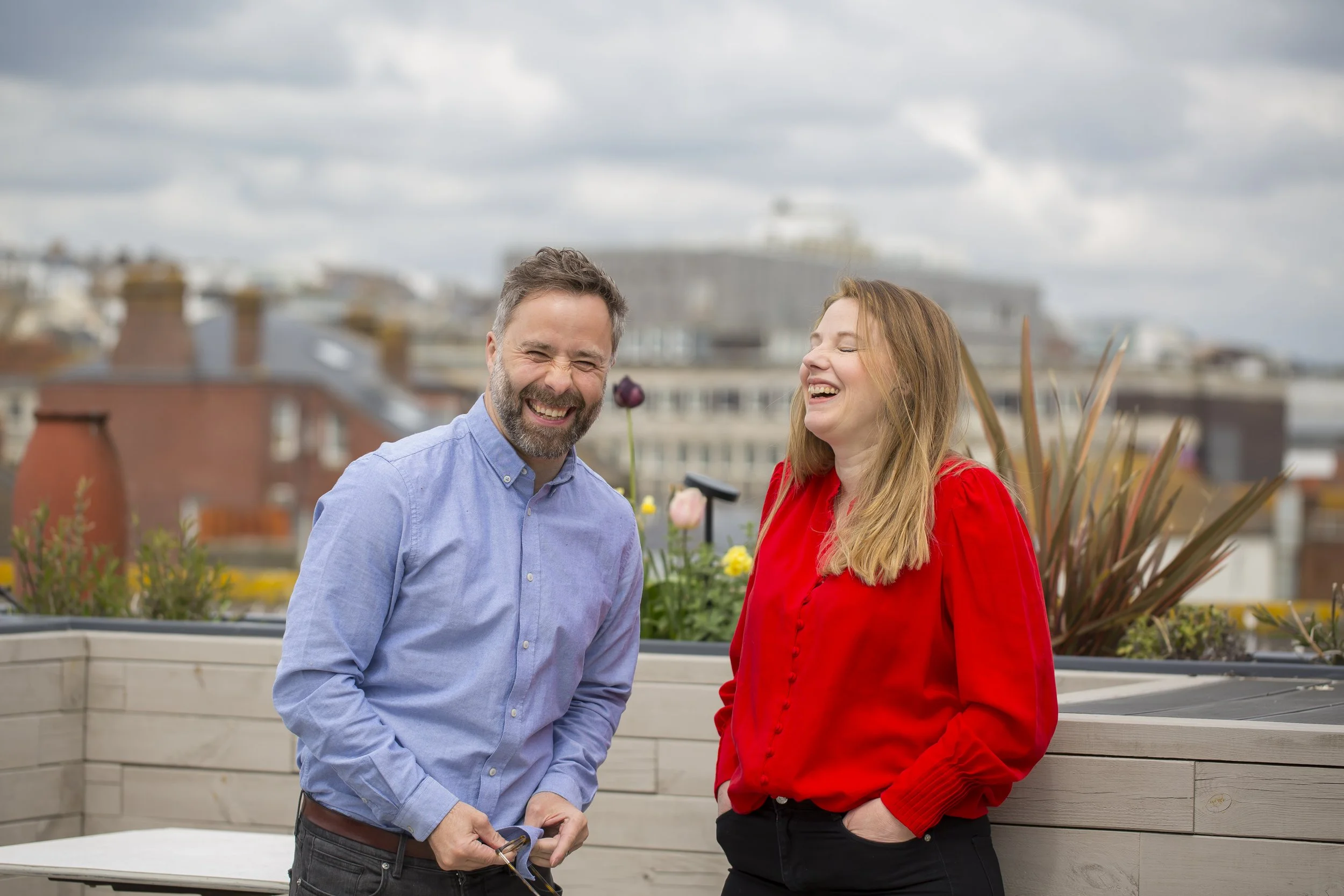
What image could illustrate this post? How about a pic of me and Dan Ford ugly laughing together... Is that real enough?! By Beth Wild.