
Extreme heat is now a fixture in our lives – so what should we do about it?
First published in Philosophical Magazine.
It’s mid-summer 2026, and like much of the world, temperatures in Cambridgeshire (UK), are unseasonally hot. Office workers swelter in glass-fronted buildings, schools close and farm fires blaze [1].
But while outdoor temperatures in Cambridgeshire hit the mid 30s, smart locals and tourists take cover inside Peterborough Cathedral. Some of them will have seen the Facebook post inviting them to take advantage of its ‘medieval air conditioning. No plugs. No compressors. No energy bills. Just 900 years of thick stone walls, soaring ceilings and clever architecture designed long before anyone had heard of climate control.’
Pragmatism delivered with a slice of humour. And boy, do we need it. It’s easy to feel doomful; we are in the grip of a particularly strong 'El Niño' event [2].
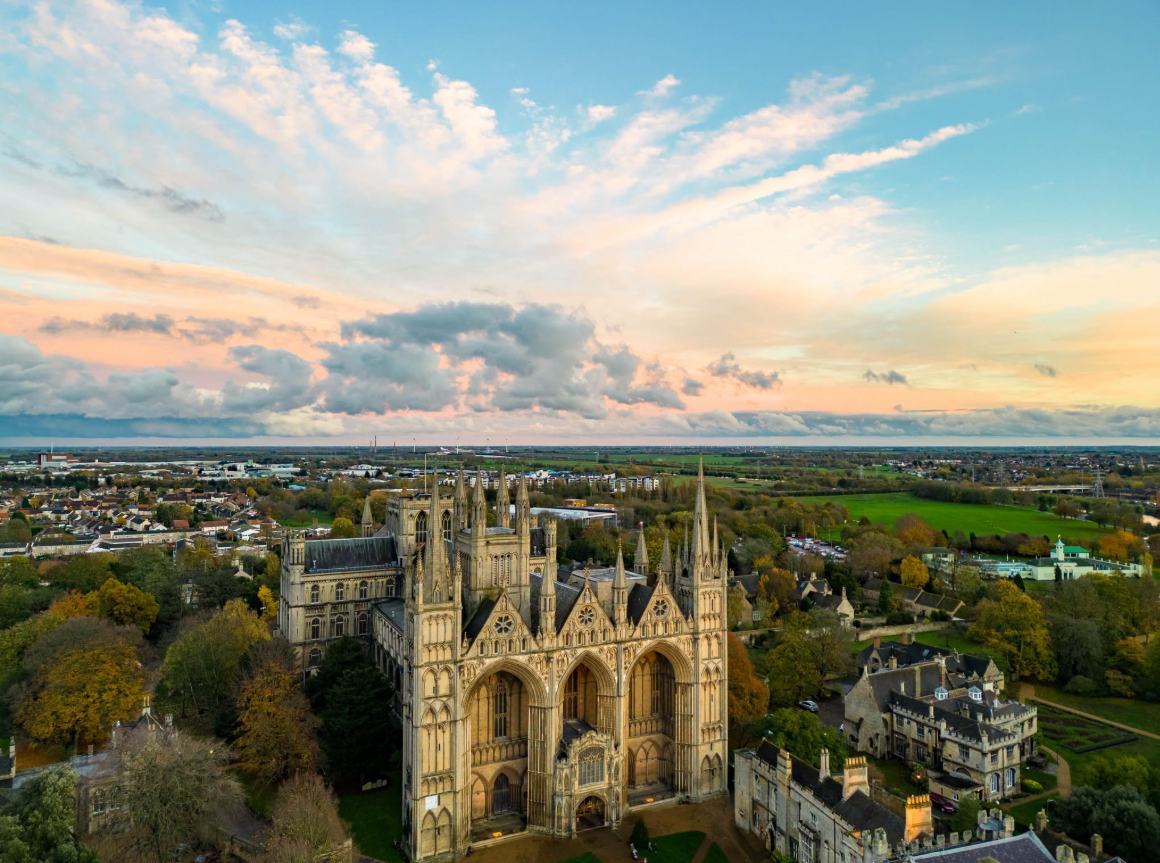
Credit: Peterborough Cathedral
El Niño happens every 3-5years when surface water in the equatorial Pacific becomes warmer than average and east winds blow weaker than normal [3]. During El Niño, the ocean transfers heat to the air, making it warmer, creating a cascade of impacts including overall warmer temperatures. This year’s El Niño – heightened by an escalating atmospheric greenhouse gas concentration - is expected to be the most intense yet.
And so, it is not surprising that amid geo-political upheaval and footballing spectacles, news stories have emerged this summer revealing the sheer brutality of heat. In France, part of the Loire river ran dry; people in India and Pakistan faced daily maximum temperatures of 46°C; NASA logged wildfires in locations as diverse as Canada, Norway, Russia and New Zealand; and June’s heat waves are estimated to have taken 20,000 lives in Europe [4-7].
Professor Hugh Montgomery of University College London (UK) told New Scientist: “This is just the start. Things are unfolding in a very, very major way now… and the long-term effects are going to be savage.
Extreme heat is set to be a continuing feature of our lives. And, for the avoidance of doubt, scientists have unequivocally stated that it is caused by greenhouse gases emissions from burning fossil fuels [8].
So far, the planet has warmed almost 1.5 degrees above pre-industrial temperatures – and in fact the figure in 2024 was 1.55 °C [9]. Even if all climate pledges are implemented, we’re still heading for 2.6 °C of warming by 2100 [10]. And that’s way, way too much [11].
But the question is not whether the world is warming, or why. It’s what we do about it.
Here’s the good news: we already know what to do.
First of all, we must urgently consign fossil fuels to the history books. Real progress is happening here. In the first half of 2025, renewable energy overtook coal as the world's leading source of electricity for the first time [12]. And the rate of growth in renewable power capacity is accelerating in more than 80% of countries [13].
But we need to go further and faster in ditching fossil fuels.
We also need to look at how we adapt to our new hotter, less predictable world.
Debate is raging over how we do that. Politicians - including National Rally in France and the Conservatives in the UK - have stirred a culture war about air conditioning [14].
I suppose there’s money to be made in selling air con. One wonders if those invested in the continued use of fossil fuels think they can get away with it just a few years longer if their customers are vacuum sealed inside comfy air-conditioned buildings, not noticing the world burning around them.
Except of course they will notice - because an unstable planet destabilises entire economies and societies. I’m reminded of Tom Toro’s famous cartoon for the New Yorker, captioned: “Yes, the planet got destroyed. But for a beautiful moment in time we created a lot of value for shareholders [15].”
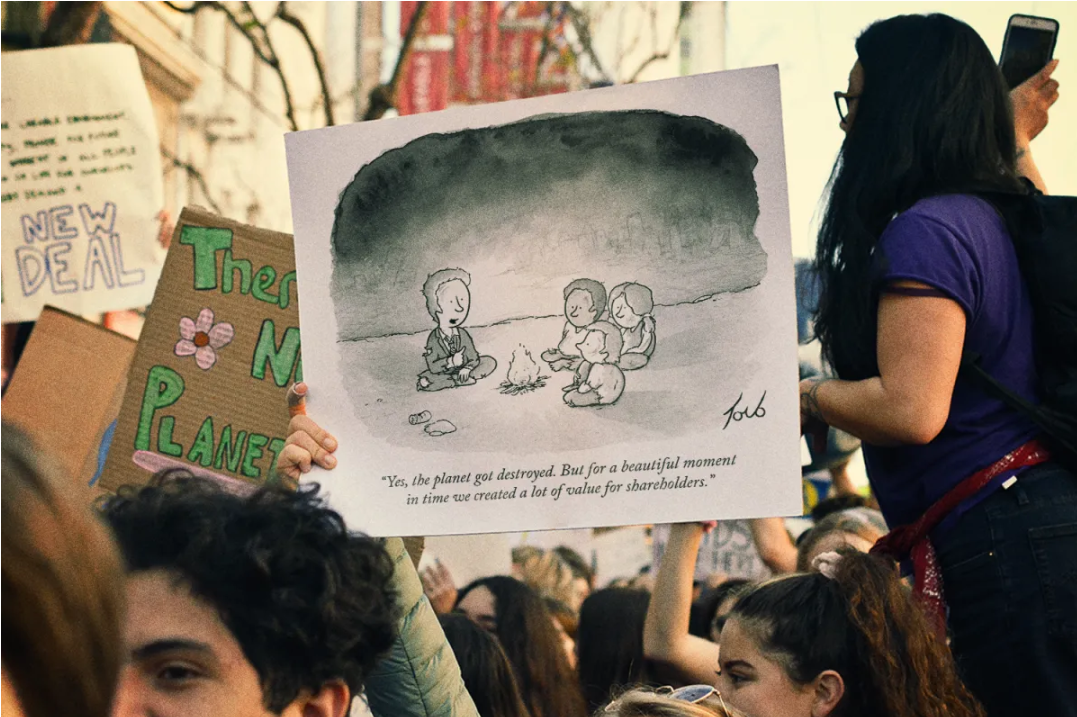
Credit: Li-An Lim via Unsplash/Tom Toro via CartoonStock
And while air conditioning will no doubt inevitably become a larger part of the response to extreme heat, it has risks. Research has shown that air conditioning increases ambient temperature and so intensifies urban heat [16]. What’s more, heatwaves cause spikes in energy use as people switch on cooling devices [17]. And this makes power outages more likely [18]. That’s very bad news if air con is your only way to cool down.
I spoke to Professor Susan Roaf last autumn about her book Adaptive Thermal Comfort: At the Extremes.She’s Emeritus Professor of Architectural Engineering at Heriot-Watt University (Scotland, UK).
Roaf said: “We need completely new thinking that enables buildings to run on local energy, using natural ventilation, solar gain in winter, and time cooling in summer, so profoundly reducing energy use in, and carbon emissions from buildings. More efficient machines are not the solution. What’s really exciting is the new generation of pioneering architects who design beautiful, comfortable, naturally-ventilated buildings that keep people cool.”
The Pearl Academy of Fashion in Jaipur, India, is a building which pioneers this approach. Set in the famously hot, arid city, the academy’s design means that it can be 20 °C cooler inside than out. It combines modern-day aesthetics with ancient, local wisdom. At its base, there's a pool of water. It's a cooling concept borrowed from the stepwells developed locally more than 1500 years ago, built for refuge from the desert heat.
The whole structure is raised above ground on pillars, creating a shaded, airy pavilion underneath. Its architect, Manit Rastogi, told CNN that the walls are built from a heat-absorbing material that forms a kind of ‘thermal bank’ which soaks up warmth through the day and releases it slowly overnight [19].
Manit Rastogi has explained his approach [20]: “For centuries, Indian architecture was celebrated for its hyper-local intelligence. In India’s Northwest, the jaali (latticed stone screen) was perfected to perforate light and accelerate breeze. In the South, deep overhangs and sloping roofs deftly managed torrential monsoons. Across the Deccan region, central courtyards formed the lungs of domestic and public life, naturally regulating microclimates.”
“Today, these design measures are dismissed as archaic and impractical. By choosing global uniformity over regional vernacular, we are inducing what sociologists call urban forgetfulness.”
“We must shift our aspirations from mimicking foreign models to modernising our own traditional wisdom. This means prioritising climate-responsive facades, local materials like terracotta, stone, and exposed brick, and passive cooling. Our regulatory frameworks must evolve past mere box-ticking exercises; building codes should incentivise climate-appropriate shadow-casting, structural insulation, and smarter facade engineering.”
Back to Cambridgeshire, and another vision for how buildings could be in the future is the Storey’s Field Centre – a community space. Designed by MUMA architects, it was commissioned by the University of Cambridge (UK) and has won multiple awards [21]. It deftly uses a passive ventilation system and very little energy, generating almost no costs for cooling. It draws air from a walled courtyard through an underground labyrinth system, cooling it via the ground before it enters the building. Warm air rises and is released through openings hidden in the roof. The manager has been quoted saying that even when it’s 35 °C outside, the main hall can remain 20 °C.
But of course, we can’t all live and work in newly-designed buildings. So how do we make our existing homes more comfortable during extreme heat?
Step one, if you can, should be to add external shading. Studies have shown that it outperforms internal options at reducing indoor overheating [22]. Susan Roaf explained why this is when we spoke: “Once incoming radiation at shortwave goes through the glass and hits another surface, it changes to longwave radiation and can't get back out through the glass. And so even if you've got curtains or a blind, the heat is already in the room. What you need is external blinds and shades and awnings."
Venetian blinds, awnings and shutters are proven to make a big difference. But if you can’t make these adaptations to your home, quicker-fix options include shade sails and parasols.
Dual-opening sash windows are smart too: they allow cool air to enter at the bottom, and hot air to leave at the top.
It’s counter-intuitive, but keeping windows closed during hot days - before opening them during cooler nights - can be very effective [23].
But extreme heat doesn't have to be faced alone. Like Peterborough Cathedral, cooler community spaces like libraries, leisure centres, water stations and parks offer some of the least resource-intensive ways to help people cope.
Likewise, Leeds in the North of England has designated 39 community hubs, libraries and leisure centres as official cool spaces, giving residents free access to shelter from the heat [24].
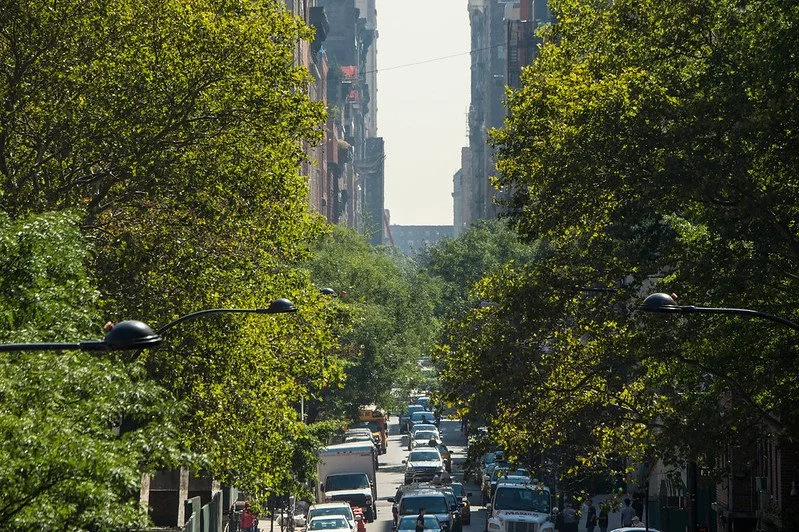
Urban greenery in New York. Credit: Climate Visuals
Elsewhere, cities are rising to the challenge in other ways. Miami, Dhaka, Los Angeles, Athens, Melbourne and others have appointed chief heat officers whose job is to find ways to keep cities cooler.
That’s important because the ‘urban heat island effect’ means city-dwellers experience particularly intense heat as artificial surfaces absorb and trap heat. Cities are 4-6°C hotter than surrounding rural areas [25].
Toronto’s heat relief strategy offers free access and extended hours at city sites whenever a heat warning is issued, extending outdoor pool hours well into the night.
Paris is intent on becoming ‘Europe’s greenest city by 2030’. It has pledged to plant 170,000 trees and to create a network of ‘cool islands’ which are reported to be typically 2°C to 4°C cooler than surrounding streets. Other research shows that green spaces of this kind can lower temperatures by as much as 7 °C [26].
In his 2025 book Wild Cities, Chris Fitch explains the power of greenery in urban areas: “First, with shade, comes protection from the hot sun, simple. Secondly, plants introduce the process of transpiration. This is when they suck water up from their roots, then release it from their upper leaves as water vapour. Many trees doing this together, such as in a small urban forest, or along a corridor, can create cooler, more comfortable urban environments.”
Fitch cites the ‘corredores verdes’ project in Medellín, Colombia. These lush corridors not only boost biodiversity but also reduce temperatures by as much as 10 °C in some places.
For many people, urban landscapes will hold the key to heat resilience. By 2050, seven in ten people will live in towns or cities [27]. And urban spaces are expanding apace. Every day, an estimated 12.7 million square metres of floor area is created [28]. Weekly, that’s equivalent to the surface area of the city of Paris.
It’s not too late to build a heat-resilient future. Susan Roaf told me: “It’s time we in the North start listening to others. It’s time for architects in South East Asia, for instance, who are creating wonderful buildings, to export their wisdom back to teach the West how to design responsible climate-friendly homes and workplaces.”
This – alongside banishing fossil fuels - is how to adapt to a hotter future. We must do it for our own sakes, and for those who follow us.
References:
1.BBC News. Fire warning to Cambridgeshire farmers as temperatures rise. (2026). [Accessed 21 July 2026].
2. BBC News. What is El Niño, and how does it affect the weather and temperatures? (2026). [Accessed 21 July 2026].
3. National Oceanic and Atmospheric Administration (NOAA). El Niño and La Niña. (2025). [Accessed 21 July 2026].
4. Le Monde. France facing 'very worrying' drought, says environment minister. (2026). [Accessed 21 July 2026].
6. NASA. Fire Information for Resource Management System (FIRMS). (2026). [Accessed 21 July 2026].
7. New Scientist. June heatwave may have killed around 20,000 people in Europe. (2026). [Accessed 21 July 2026].
10. Statista. Global temperature increase by scenario 2100. (2026). [Accessed 21 July 2026].
11. UN Climate Summit. Comparing climate impacts at 1.5°C, 2°C, 3°C and 4°C. (2023). [Accessed 21 July 2026].
12. EMBER. Global Electricity Mid-Year Insights 2025. (2025). [Accessed 21 July 2026].
13. International Energy Agency (IEA). Executive summary: Renewables' global growth, driven by solar PV, remains strong amid rising headwinds. (2025). [Accessed 21 July 2026].
14. euobserver. Europe is boiling — and the far-right is turning air conditioning into a culture war. (2026). [Accessed 21 July 2026].
16. Clancey G, Chang J-H & Chee LPY. Heat and the city: Thermal control, governance and heath in urban Asia. Urban Studies Journal. 61(15) (2024).
17. EMBER. Global Electricity Review 2025. [Accessed 21 July 2026].
18. The Conversation. How extreme weather threatens to bring down UK’s power lines and halt supply to homes. (2023). [Accessed 21 July 2026].
19. CNN World. Ancient ‘air-conditioning’ cools building sustainably. (2012). [Accessed 21 July 2026].
20. Hindustan Times. Building with a view to contextual modernity. (2026). [Accessed 21 July 2026].
21. Architects' Journal. RIBA Stirling Prize 2018: Storey’s Field Centre and Eddington Nursery by MUMA. (2018). [Accessed 21 July 2026].
22. Kharman HT, Roberts BM, De Grussa Z & Beizaee A. Overheating adaptation in temperate European dwellings: a systematic review of evidence on shading devices. Building and Environment. 300 (2026),
23. Loughborough University. Sun shields could be the key to keeping homes cool during UK heatwaves. (2025). [Accessed 21 July 2026].
24. BBC News. 'Cool space' scheme launched to help in hot weather. (2026). [Accessed 21 July 2026].
25. European Commission. Urban heat islands: managing extreme heat to keep cities cool. (2024). [Accessed 21 July 2026].
26. Soltanifard H & Amani-Beni M. The cooling effect of urban green spaces as nature-based solutions for mitigating urban heat: insights from a decade-long systematic review. Climate Risk Management. 49 (2025).
27. World Bank Group. Urban Development. [Accessed 21 July 2026].
28. UN Enviroment Programme. Climate action key to affordable housing, but buildings decarbonisation stalls. (2026). [Accessed 21 July 2026].